
Is the fully automatic cotton candy machine a gimmick or a real business opportunity?
2026-01-30 11:58:20
Click:
“
You may have seen machines like this in shopping malls, scenic spots, amusement
”
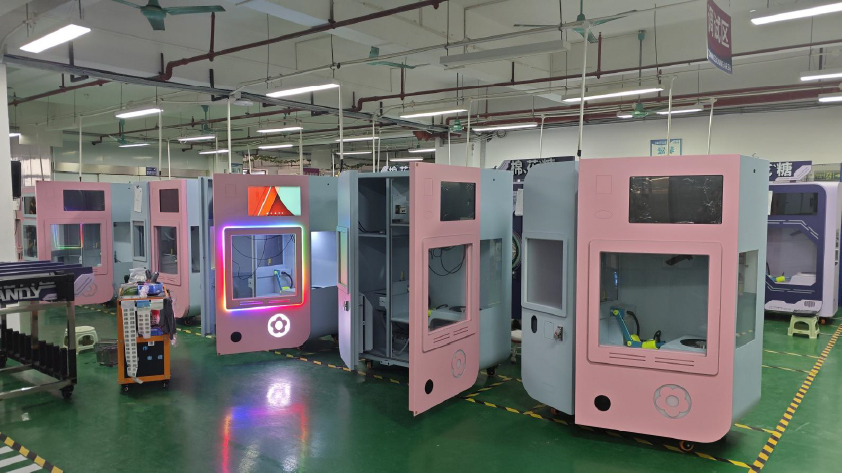
You may have seen machines like this in shopping malls, scenic spots, amusement parks, or outside cinemas: inside a transparent window, sugar threads twine like clouds, and in just a minute or two, a fluffy and adorable cotton candy is handed to the customer. No manual operation is required; the entire process is automated—fully automatic cotton candy machines are quietly appearing in crowded places. But is it merely a fleeting 'trendy toy,' or a commercial opportunity with sustainable profit potential? The answer isn't black and white; it depends on whether several key concerns commonly raised in the market can be properly addressed.

This article will explore the commercial feasibility of fully automatic cotton candy machines from an objective analytical perspective, and, combined with the author SevenCloud Technology's experience in this field, provide a clear evaluation framework for investors or operators who intend to enter this industry.
Concern 1: 'Isn't this just a high-end toy? Where is its actual competitive advantage?'
There are many types of vending machines on the market, from beverages and snacks to blind box toys, so why choose a cotton candy machine? Its core advantage does not lie in 'automation' itself, but in the instant experience, emotional interaction, and light entertainment consumption it provides.
Emotional consumption and scenario-based profit
Unlike ordinary fast-moving consumer goods, freshly made cotton candy has distinct contextual attributes and emotional value:
High profit margin: The main raw material is sugar, which has a low cost, but the finished product has a significant premium. Especially in scenarios such as parent-child activities, couples, and festivals, consumers are willing to pay for 'instant happiness'.
Impulsive consumption is driven by the fact that smart cotton candy machines have a strong visual appeal and provide instant gratification, which can easily stimulate queuing and social sharing.
Flexible scene adaptation: It can be installed in a variety of places such as amusement parks, cinemas, shopping districts, and festival markets, forming a differentiated competition with traditional snack machines.
Second concern: 'Will it just become a decoration after I buy it? How can I avoid making a mistake?'
The automated equipment industry does indeed suffer from issues such as inconsistent quality and lack of after-sales service. This is especially true for fully automatic cotton candy machines, which involve multiple processes including mechanics, heating, and sugar dispensing, making stability paramount.
Four key points for choosing a reliable supplier
On-site case verification: Require suppliers to provide a list of actual locations where equipment has been deployed, and it is best to be able to check the operating status on-site or via video.
Production Transparency: Possesses formal production qualifications and a quality management system, such as ISO certification. All models from SevenCloud Technology have passed CE safety certification, and customers are welcome to schedule production line visits.
User testimonials: Obtain the contact information of the existing operators to understand the actual operational data and after-sales experience.
Company operating history: Prioritize companies with a history of continuous R&D and iteration in this field, and avoid short-lived trading companies.
Concern 3: 'Will the operation and maintenance be very troublesome?'
The significance of 'fully automated' is precisely to lower the barrier to human operation. A well-designed cotton candy machine should be 'beginner-friendly' in its daily operation and maintenance.
What exactly does daily operation include?
Adding ingredients: mainly sugar and paper sticks, usually it can be done in 3-5 minutes.
Cleaning: Most models have an automatic cleaning program, requiring only wiping of the outer casing and collection tank daily.
System monitoring: Through the IoT platform, users can view sales, inventory, fault alarms and other information in real time on their mobile phones, enabling remote management.
Training support: Reputable suppliers will provide video tutorials, operation manuals, and online guidance, focusing on troubleshooting and routine maintenance rather than mechanical principles.
All of SevenCloud Technology's equipment is equipped with a 'cloud operation and maintenance system,' which allows operators to manage multiple machines, receive sugar material warnings, and collect revenue statistics via an app, significantly reducing the frequency of on-site inspections.
Concern 4: 'What if it breaks down? Is the after-sales service adequate?'
Equipment downtime results in lost revenue, making after-sales service a top priority in investment decisions.
What aspects should be considered when evaluating after-sales service?
Warranty terms: Clearly define the warranty period and scope (including parts, labor, shipping, etc.), and whether local repair or parts delivery is supported.
Response mechanism: Does it provide multilingual and cross-time zone technical support, and how timely is the response?
Parts supply chain: Whether commonly used consumables and core components are in sufficient stock and have a stable supply.
Localized service network: Whether there are repair shops or partner service providers in key markets.
SevenClouds provides at least a one-year warranty for all devices and has established a global parts warehouse to support the delivery of key components within 48 hours.
Returning to the essence of business: Return on investment and pricing strategies
A reliable, fully automatic cotton candy machine typically costs between RMB 30,000 and 50,000. When evaluating its performance, one should not only consider the unit price but also comprehensively calculate long-term operating costs and profit potential.
The raw material cost is low; the cost of sugar and paper sticks per serving is less than 1 yuan, while the selling price can reach 10-25 yuan, resulting in a considerable gross profit margin.
If you sell 50 units per day, you can recover the equipment cost in about 3 to 7 months (depending on the traffic at the location and the pricing strategy).
It supports value-added services such as customized candy shapes, colors, and packaging, which can further increase the average order value and repurchase rate.

In summary, fully automatic cotton candy machines are not a 'passive income' project suitable for everyone. Their success depends on high-quality equipment, suitable locations, lightweight operation, and reliable after-sales service. For entrepreneurs with scene resources and a focus on consumer experience, it is indeed a niche market that can be scaled up, has strong emotional premium, and profit potential.
文章推荐
相关推荐
-
top The 2025 GTI Asia Gu...
The three-day 2025 GTI Guangzhou Amusement Equipment Industry Exhibition conclud
技术 界面 产品 前端 
-
top 10 ingredients recom...
Ice cream is undoubtedly one of the most popular desserts on a scorching summer
界面 产品 设计
-
top Reco With the technologic...
SevenCloud Technology, China's leading manufacturer of fully automatic vending m
界面 设计
-
SevenCloud Technolog...
Panyu, Guangdong — Recently, Guangzhou SevenCloud Technology Co., Ltd. announced
技术 界面 产品
-
Direct supply from t...
In a factory in Huashen Science and Technology Park in Panyu, Guangzhou, the sou
界面 产品
-
Is the fully automat...
You may have seen machines like this in shopping malls, scenic spots, amusement
技术 产品


Our philosophy is“With our efforts, create value for you”,Let every user can feel the service we bring you.



点击右上角
分享给朋友吧
Contact us
Telephone:13318704214
Mailbox:cris_huang@sevencloud.com.cn
网址:http:www.sevencloud.com
Address: 9th Floor, Building A, Huashen Science Park, Qiaonan Street, Panyu District, Guangzhou, Guangdong Province
Follow us


Tiktok

Little Red Book
© YUN科技 粤ICP备10202590号-2
 客服6
客服6 客服7
客服7
